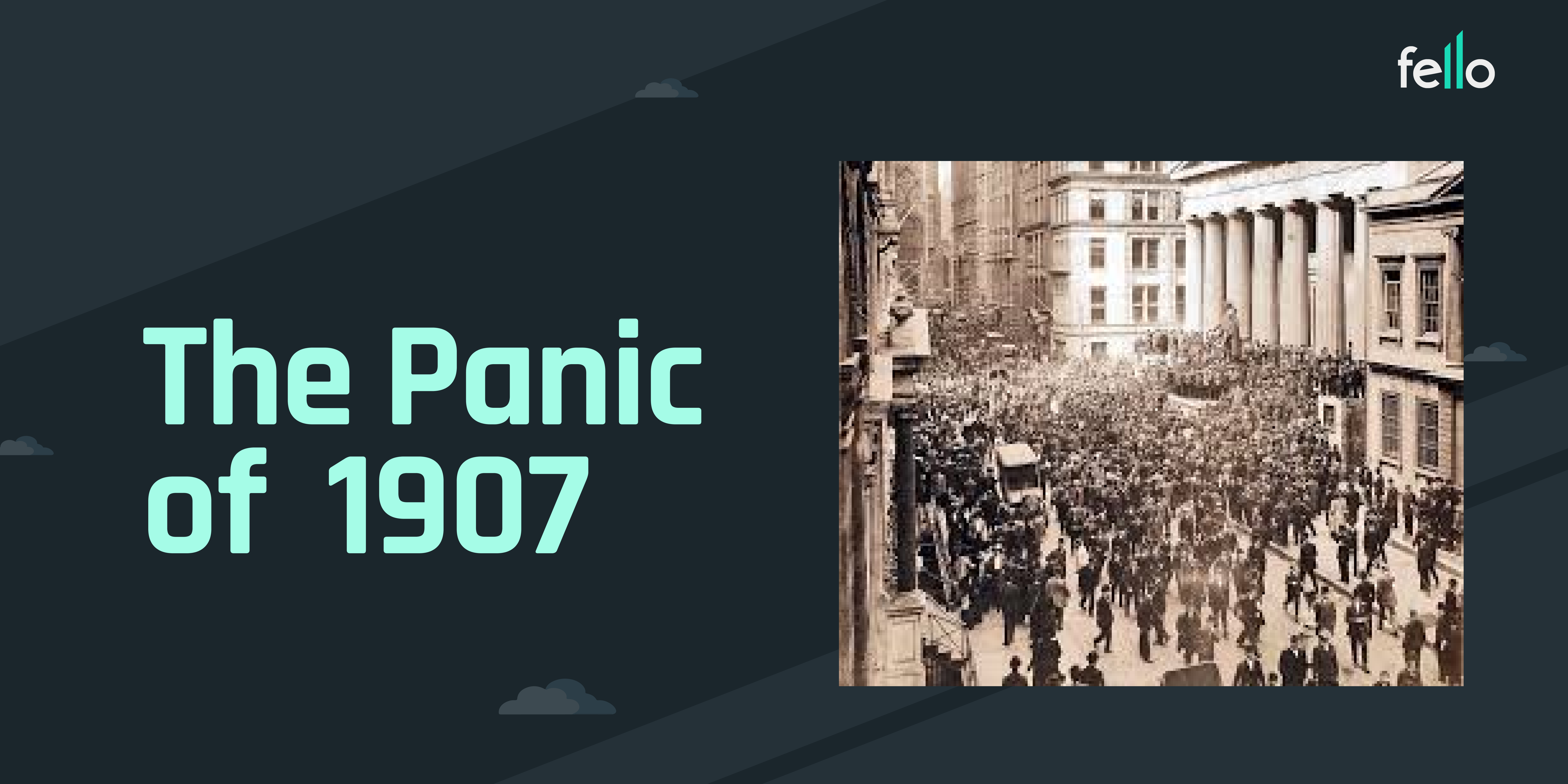
In the series of The Great Booms, we uncover lesser-known but powerful financial turning points. Some shocks exposed weaknesses before reforms could catch up. The Panic of 1907 was one such moment, a sudden banking crisis that rattled the U.S. financial system and directly led to the creation of the Federal Reserve, permanently changing how financial stability is managed.
Background: America’s Financial System Before 1907
At the start of the 20th century, the United States did not have a central bank like the Federal Reserve. The financial system was fragmented, with thousands of banks operating independently and very limited regulation.
Key vulnerabilities included:
- Heavy reliance on trust companies instead of regulated banks
- Lack of emergency liquidity during crises
- Speculative stock market practices
- No central authority to stabilize markets
This fragile system created the perfect conditions for a financial panic.
The Trigger: A Failed Market Speculation
The crisis began in October 1907 when a group of investors attempted to corner the market in United Copper Company stock. When the scheme failed, stock prices collapsed, triggering losses for banks and trust companies linked to the investors.
As news spread:
- Depositors rushed to withdraw money from trust companies
- Several financial institutions faced insolvency
- Stock markets plunged sharply
Fear spread faster than facts, turning a single failure into a systemic crisis.
The Role of J.P. Morgan
With no central bank to manage the crisis, private financier J.P. Morgan emerged as the key figure in stabilizing the financial system.
Morgan:
- Organized emergency meetings with bankers and industrial leaders
- Coordinated massive financial support for struggling institutions
- Persuaded banks to pool resources and restore confidence
His leadership prevented a complete collapse of the banking system.
Nationwide Impact of the Panic
The Panic of 1907 had severe consequences for the economy:
1) Banking Failures
Many trust companies and banks collapsed due to liquidity shortages.
2) Stock Market Crash
The New York Stock Exchange saw major declines in share prices.
3) Economic Slowdown
Businesses reduced investments, and unemployment increased.
4) Loss of Public Confidence
The crisis shattered trust in financial institutions and exposed weaknesses in the banking system.
How the Panic Changed the Financial System
The Panic of 1907 became a turning point in financial history.
Birth of the Federal Reserve
The crisis convinced policymakers that the US needed a central bank. This led to:
- The creation of the Federal Reserve System in 1913
- Stronger banking regulations
- Better mechanisms to manage financial crises
Reforms in Banking and Finance
After 1907:
- Trust companies faced stricter oversight
- Financial markets became more regulated
- The government took a more active role in economic stability
Long-Term Lessons from the Panic of 1907
The Panic of 1907 offers timeless lessons for modern economies:
- Financial systems need strong regulation and oversight
- Market speculation can trigger systemic crises
- Confidence is as important as capital in banking
- Central banks play a crucial role in stabilizing markets
Many modern financial policies trace their roots back to this crisis.
Why The Panic of 1907 Still Matters Today
Even in the 21st century, the Panic of 1907 remains relevant. Events like the 2008 global financial crisis and modern banking shocks echo similar patterns—panic, liquidity shortages, and urgent interventions.
The Panic of 1907 showed that financial stability depends not just on markets, but on strong institutions and timely leadership.
Conclusion
More than a century later, the legacy of the crisis continues to shape global finance. It exposed the weaknesses of an unregulated financial system and led to reforms that transformed modern banking forever.
The Panic of 1907 remains a powerful reminder that when trust disappears from financial markets, even the strongest economies can face sudden collapse.