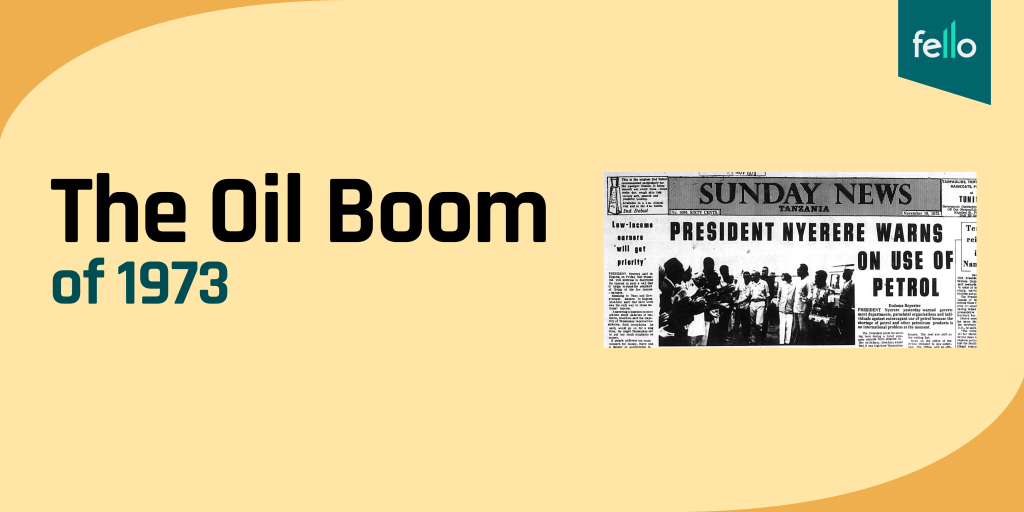
In the series of the Great Booms, we are covering moments in history when markets, commodities, and economies changed direction overnight. Some booms created wealth, some triggered crises, and some reshaped global power forever. Among them, The Oil Boom of 1973 – How OPEC Changed World Economy stands out as a turning point that transformed energy markets, global politics, and economic systems across the world.
The World Before the Oil Boom
Before 1973, oil was cheap and widely available. Most Western countries relied heavily on Middle Eastern oil, but they did not see it as a strategic risk.
Key realities before the crisis:
- Oil prices were low and relatively stable.
- Western oil companies dominated pricing and supply.
- Energy consumption was rising due to industrial growth and automobiles.
This dependency created a fragile system—one that would soon be tested.
The Rise of OPEC’s Influence
The Organization of the Petroleum Exporting Countries (OPEC) was founded in 1960 by Iran, Iraq, Kuwait, Saudi Arabia, and Venezuela. Its goal was to give oil-producing nations more control over their natural resources.
By the early 1970s:
- OPEC controlled a major share of global oil production.
- Member countries wanted fairer prices and political influence.
- Coordination among oil producers began strengthening.
This growing unity gave OPEC the power to influence global oil markets.
The Trigger: The Yom Kippur War
In October 1973, the Yom Kippur War broke out between Israel and Arab states led by Egypt and Syria.
When the United States and its allies supported Israel, Arab OPEC members responded with a historic move:
- They imposed an oil embargo on the US and Western nations.
- Oil production was reduced.
- Prices were increased sharply.
This decision shocked the global economy.
The Oil Price Explosion
The impact was immediate and dramatic:
- Oil prices quadrupled within months.
- Prices jumped from around $3 per barrel to nearly $12 per barrel.
- Fuel shortages spread across many countries.
- Long queues appeared at petrol stations.
- Industries faced rising production costs.
This sudden surge marked the beginning of the oil boom.
How the Oil Boom Changed the World Economy
1) Global Inflation
Higher oil prices increased costs across industries:
- Transportation became expensive.
- Manufacturing costs rose.
- Consumer prices surged.
Many countries experienced high inflation combined with slow growth, a phenomenon later known as stagflation.
2) Shift in Global Power
The oil boom transformed oil-producing nations into global economic forces:
- Middle Eastern countries accumulated massive wealth.
- Saudi Arabia gained global influence.
- Western nations realized their vulnerability to energy dependence.
For the first time, resource-rich nations held significant power over global markets.
3) Economic Slowdown in the West
The oil shock pushed many developed economies into recession:
- Industrial output declined.
- Unemployment increased.
- Consumer spending slowed.
The crisis exposed the deep connection between energy and economic growth.
4) Transformation of Energy Policies
After 1973, governments rethought their energy strategies:
- Investment in alternative energy increased.
- Strategic oil reserves were created.
- Energy efficiency became a priority.
- Nuclear and renewable energy projects expanded.
Energy security became a central policy focus worldwide.
5) Rise of Petrodollars
Oil-exporting countries generated huge revenues known as petrodollars:
- These funds flowed into global banks and financial markets.
- International lending expanded.
- Global financial systems became more interconnected.
This reshaped global capital flows for decades.
Long-Term Impact of the 1973 Oil Boom
The effects of the 1973 oil boom extended far beyond the 1970s:
- Repeated oil price cycles in later decades.
- Stronger influence of OPEC in global markets.
- Increased awareness of geopolitical risks in commodities.
- A lasting link between politics and energy prices.
Even today, oil markets reflect the same dynamics that emerged in 1973.
Lessons from the Oil Boom of 1973
The oil boom offers timeless insights:
- Commodities can reshape global economies.
- Geopolitics can disrupt markets overnight.
- Dependence on a single resource carries risks.
- Economic power can shift rapidly.
These lessons remain relevant in modern financial and commodity markets.
Conclusion
The events of 1973 were more than an oil crisis—they were a turning point in global economic history. By using oil as a strategic weapon, OPEC proved that natural resources could influence global markets and political decisions for decades to come.
The Oil Boom of 1973 – How OPEC Changed World Economy remains one of the most powerful examples of how a single commodity boom can transform the global economy forever.