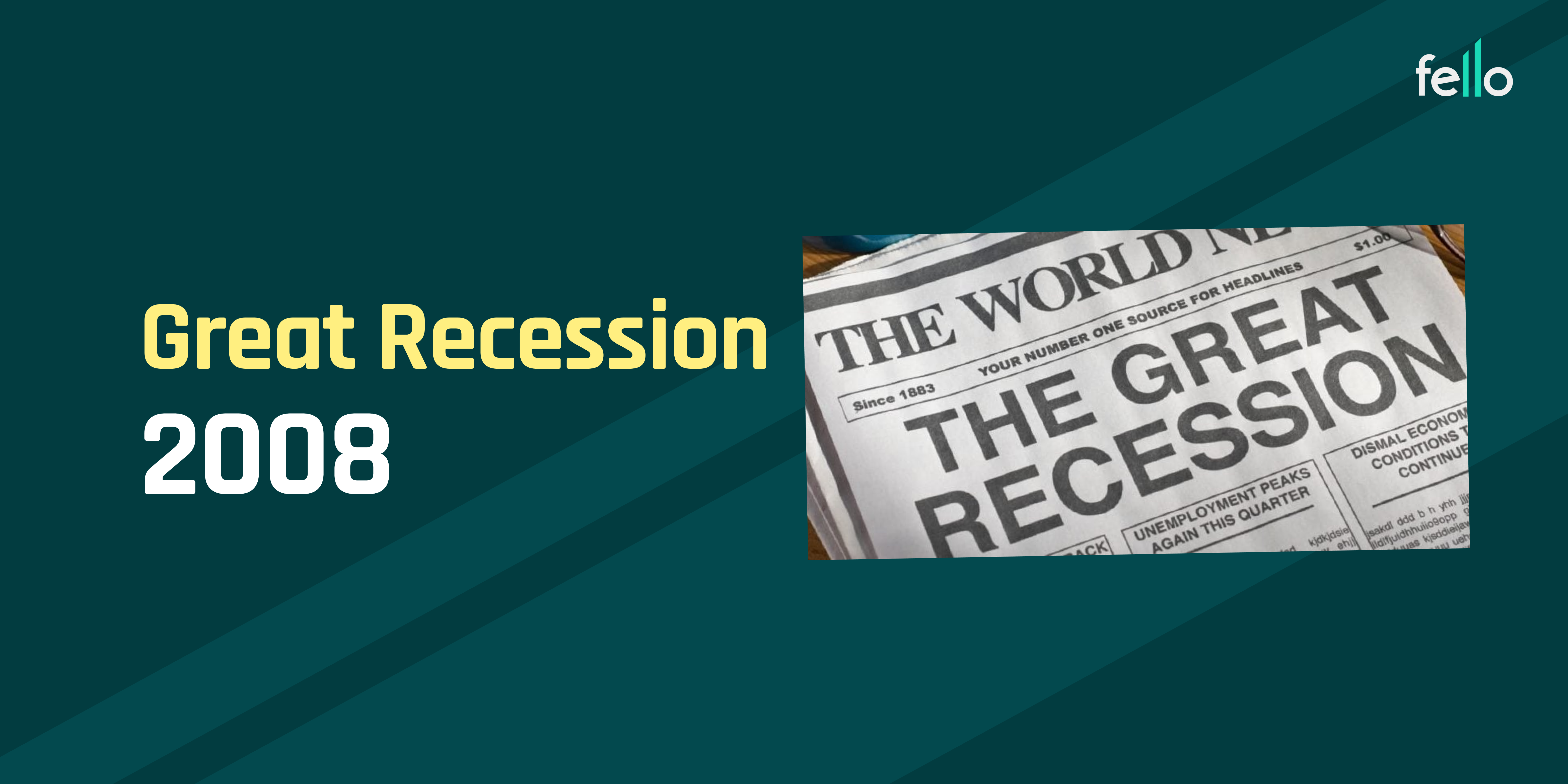
In the series of The Great Booms, we explore moments in history when markets, economies, and financial systems shifted almost overnight. Some booms built fortunes, others exposed deep cracks in the system. Among them, The Great Recession of 2008 stands out as a global financial collapse that began with the housing market, spread through banks and institutions, and reshaped how the world views risk, debt, and regulation.
Understanding the Great Recession
The Great Recession refers to the severe global economic downturn that occurred between 2007 and 2009. While recessions are a normal part of economic cycles, this one was unusually deep and widespread. The roots of the crisis lay in the US housing market, where easy credit, risky lending practices, and rising home prices created an unsustainable bubble.
Banks issued mortgages to borrowers with weak credit profiles, often offering low initial interest rates that later increased sharply. These loans were bundled into mortgage-backed securities and sold to investors around the world. When borrowers began defaulting, the value of these securities collapsed, creating massive losses for financial institutions.
Key causes behind the Great recession- 2008
Several factors combined to trigger and amplify the crisis:
- Subprime mortgage crisis: High-risk home loans were given to borrowers without adequate income verification or repayment capacity.
- Housing bubble: Rapid appreciation in property prices encouraged speculation and excessive borrowing.
- Complex financial products: Mortgage-backed securities and derivatives spread risk across the global financial system.
- Weak regulation: Financial institutions operated with high leverage and limited oversight.
- Loss of confidence: Once trust in banks eroded, credit markets froze.
Timeline of the Great Recession
| Year | Major Event | Economic Impact |
|---|---|---|
| 2006 | US housing prices peak | Early warning signs appear |
| 2007 | Mortgage defaults increase | Financial stress begins |
| 2008 | Lehman Brothers collapses | Global financial panic |
| 2009 | Government stimulus and bailouts | Gradual stabilisation |
Impact on the global economy
The effects of the Great Recession were felt across both developed and emerging economies. In the United States, unemployment rose sharply, reaching nearly 10 percent. Millions of households lost their homes due to foreclosures, while retirement savings and investments declined in value.
Europe faced its own challenges as several countries struggled with sovereign debt crises. Nations such as Greece, Spain, and Ireland required international financial support. Global trade slowed significantly as consumer demand weakened, highlighting how interconnected the world economy had become.
Real estate and housing market collapse
Real estate played a central role in the crisis. Falling property prices wiped out household wealth and left many homeowners owing more on their mortgages than their homes were worth. Construction activity declined, banks tightened lending standards, and homeownership rates fell.
The housing crash changed buyer behaviour for years to come. Governments introduced stricter lending norms, higher down payment requirements, and closer monitoring of financial institutions. Real estate markets became more cautious and data-driven as a result.
Government and central bank response
To prevent a complete economic collapse, governments and central banks introduced extraordinary measures. Central banks cut interest rates aggressively and launched large-scale liquidity programs. Governments stepped in with bank bailouts, fiscal stimulus packages, and support for struggling industries.
These interventions helped stabilise financial markets and restore confidence, although they also increased public debt levels and raised long-term policy questions.
Long-term lessons from the crisis
The Great Recession highlighted the dangers of excessive leverage, unchecked speculation, and poor risk assessment. It led to reforms in banking regulations, capital requirements, and transparency standards. Stress testing of banks and tighter credit evaluation became standard practice.
For individuals, the crisis reinforced the importance of prudent borrowing, emergency savings, and diversification. Investors became more aware of market cycles and systemic risks.
Conclusion
The Great recession- 2008 was more than a temporary economic slowdown. It was a global financial shock that reshaped housing markets, financial regulation, and economic policymaking worldwide. Understanding its causes and consequences remains essential for navigating future economic cycles and making informed financial decisions.